Arctic Blast Ingredients: Active & Inactive Formula Explained
Complete Arctic Blast ingredient guide based on the current Drug Facts label, including menthol 10%, camphor 3% and listed inactive ingredients.
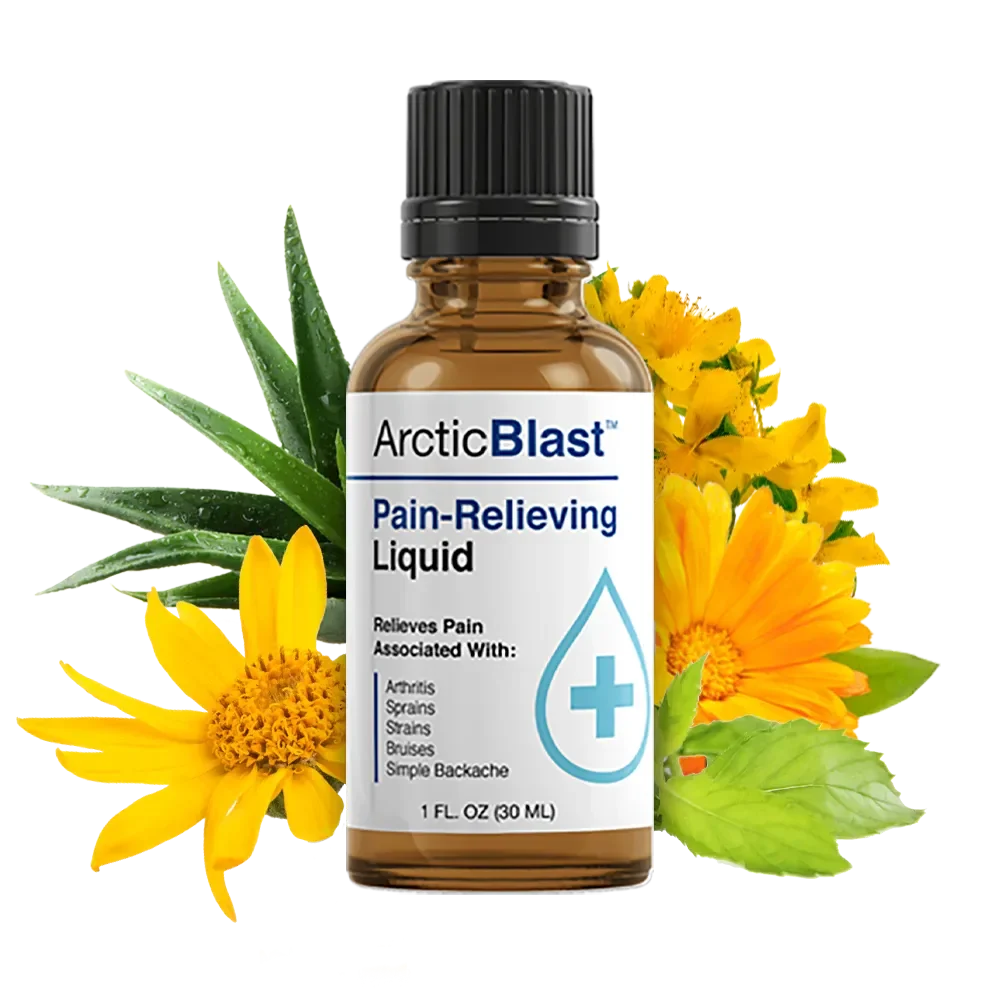
Active ingredients
Menthol 10%
Menthol is the highest-concentration active ingredient on the label and is used as a topical analgesic/counter-irritant. Independent research describes menthol activation of TRPM8 sensory channels and the characteristic cooling sensation.
Camphor 3%
Camphor is the second labeled active ingredient. Laboratory research has examined camphor interactions with several sensory ion channels, including TRPV1 and cold-sensitive pathways. Ingredient research should not be interpreted as a finished-product clinical trial.
Inactive ingredients on the current label
DailyMed lists: aloe vera leaf juice, deionized water, arnica montana flower extract, calendula officinalis extract, dimethyl sulfoxide (DMSO), emu oil, ethylhexylglycerin, glycerin, St. John’s Wort, isopropyl alcohol, methyl salicylate, olive oil, phenoxyethanol, polysorbate 20, propylene glycol and SD Alcohol 40B.
| Ingredient | Label role/status | Why it matters to this guide |
|---|---|---|
| Menthol 10% | Active ingredient | Topical analgesic; cooling counter-irritant mechanism |
| Camphor 3% | Active ingredient | Topical analgesic active |
| Aloe, arnica, calendula, St. John’s Wort | Inactive ingredients | Botanical components of the vehicle/formula |
| DMSO | Inactive ingredient | Listed on label; should not be promoted as an active drug ingredient |
| Methyl salicylate | Inactive ingredient in this label | Present in formula, but not listed as an Arctic Blast active ingredient |
Why “active” and “inactive” must stay separate
Promotional imagery can make botanicals look central, but the Drug Facts panel determines which ingredients are identified as actives for the labeled OTC drug. This site therefore avoids calling DMSO, arnica, aloe or methyl salicylate “active ingredients” in Arctic Blast when the current label does not.
Ingredient evidence is not product evidence
Menthol and camphor have scientific literature about their sensory and analgesic mechanisms. Those studies help explain the ingredients generally. Unless a finished-product Arctic Blast clinical trial is identified, it would be misleading to say ingredient studies make Arctic Blast “clinically proven.”
Check current Arctic Blast availability
Use the purchase page to verify the current package options after reviewing the formula and safety information.
View Current Package OptionsWhat “inactive” means in this context
Inactive does not mean that an ingredient is chemically inert or meaningless. In Drug Facts labeling, the term distinguishes the ingredients identified as the therapeutic drug actives from the rest of the formulation. Inactive ingredients can influence texture, solvent properties, stability, fragrance, evaporation, preservation and how the product feels on the skin. They can also matter to people with sensitivities.
That distinction is especially important for Arctic Blast because marketing discussions sometimes focus heavily on DMSO or botanicals. The current label still identifies menthol 10% and camphor 3% as the actives. A responsible ingredient page can discuss the rest of the formula without quietly reclassifying those ingredients.
How to read the formula without overclaiming it
Start with the active ingredients and labeled purpose. Then review the inactive list for substances you may wish to avoid or ask a clinician about. Finally, use independent research to understand individual ingredients only within the limits of that research. A study on a different concentration, vehicle or population should not be presented as though it tested Arctic Blast itself.
This is also why the botanical hero image is treated as promotional/product imagery rather than as a scientific map of active ingredients. The visual can help identify the product, but the Drug Facts panel controls the ingredient classification used in the copy.
Ingredient checklist for a careful buyer
- Identify the active ingredients and their concentrations first.
- Review the inactive list for known sensitivities or ingredients you want to discuss with a pharmacist.
- Do not assume a botanical image means the botanical is an active drug ingredient.
- Do not use research on one ingredient to predict a guaranteed outcome from the finished formula.
- Re-check the physical bottle label when the product arrives because labels can be updated over time.
Why DMSO attracts attention
DMSO is a recognizable ingredient and is sometimes emphasized heavily in marketing discussions of topical products. In the current Arctic Blast Drug Facts record, however, it appears in the inactive ingredient list. That is the status this site uses. Its presence can be discussed, but it should not be promoted as though the label identifies it as the product’s principal active pain-relief drug.
Botanicals in the formula
Aloe, arnica, calendula and St. John’s Wort are also listed as inactive ingredients. Their inclusion may be relevant to formulation or consumer preference, but the label does not assign them the topical-analgesic purpose. This distinction helps prevent the common affiliate-copy problem of turning every familiar plant extract into a separate efficacy claim.
References
- DailyMed — Arctic Blast Pain Relieving (menthol, camphor synthetic) liquid
- Pergolizzi JV Jr, et al. The role and mechanism of action of menthol in topical analgesic products. J Clin Pharm Ther. 2018.
- Xu H, et al. Camphor activates and strongly desensitizes the TRPV1 channel. J Neurosci. 2005.
- Vetter I, et al. Amplified cold transduction in native nociceptors by M-channel inhibition. J Neurosci. 2013.